
With Election Day one week away, a close race could leave voters wondering whether Texas automatically orders a recount.
The answer is no. At least not based on a narrow margin.
Some states require automatic recounts when candidates finish within a certain percentage of each other. Texas is different. The Texas Secretary of State says the only automatic recount trigger is a tie in an election requiring a plurality or majority vote.
That means a race decided by a handful of votes does not automatically receive another count unless it ends in a tie.
Recounts are uncommon, particularly in larger contests, said Jon Taylor, a political scientist at the University of Texas at San Antonio.
“Yeah, it’s rare,” Taylor said. “I mean, if you’re going to see recounts and demands for recounts, it’s usually for local races, city council, school board, that sort of thing.”
In most candidate races, a candidate who was not declared the winner can request a recount. For elections involving a proposition or other measure, the campaign treasurer of a specific-purpose political committee or at least 25 eligible voters acting together may petition for one, according to the Secretary of State.
A recount request is not the same thing as an election contest. A recount does not re-qualify voters or investigate accusations of fraud. It is a process to recount the votes in the race or measure identified in the petition.
For many non-electronic recount requests, state rules require a qualifying basis — such as a margin of less than 10% of the winner’s total vote or fewer than 1,000 total votes cast in the race.
But the Secretary of State says no specific ground is required to request a recount of results from an electronic voting system.
A candidate or other eligible petitioner must move quickly.
The Secretary of State says a written recount petition must be filed no later than two days after the official canvass of election returns. The canvass is the formal review and certification process conducted after Election Day.
The petition must identify the race or measure to be recounted and include other required information, including the voting method used. For electronic voting systems, the petitioner also indicates whether they prefer a manual or electronic recount.
For a candidate-requested recount, the petitioner must submit a deposit with the request.
Under the Secretary of State’s formula, the deposit for an electronic voting system is $100 for each Election Day polling location or precinct, whichever calculation is lower. Early voting is counted as an additional unit.
That deposit can be used for costs including recount committee members, tabulating equipment and recount administration.
If a race ends in a tie, the recount is automatic. No petition or deposit is required, and the government entity responsible for the election pays the cost.
An electronic recount does not mean officials simply look again at an election-night total.
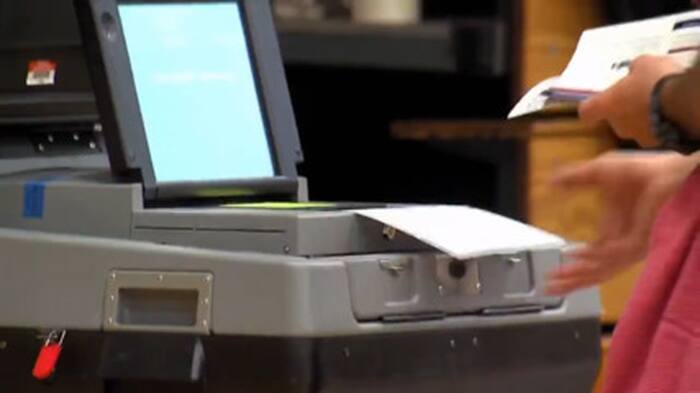
According to the Secretary of State, an electronic recount uses electronic media prepared for the recount and scans the paper ballots containing the race being reviewed. A manual recount, by contrast, involves a counting team reviewing and tallying votes by hand.
Only the race named in the recount petition is reviewed.
READ MORE:


